

By Nelson Cury, Co-Founder & CEO, 2O3 · Updated September 29, 2026
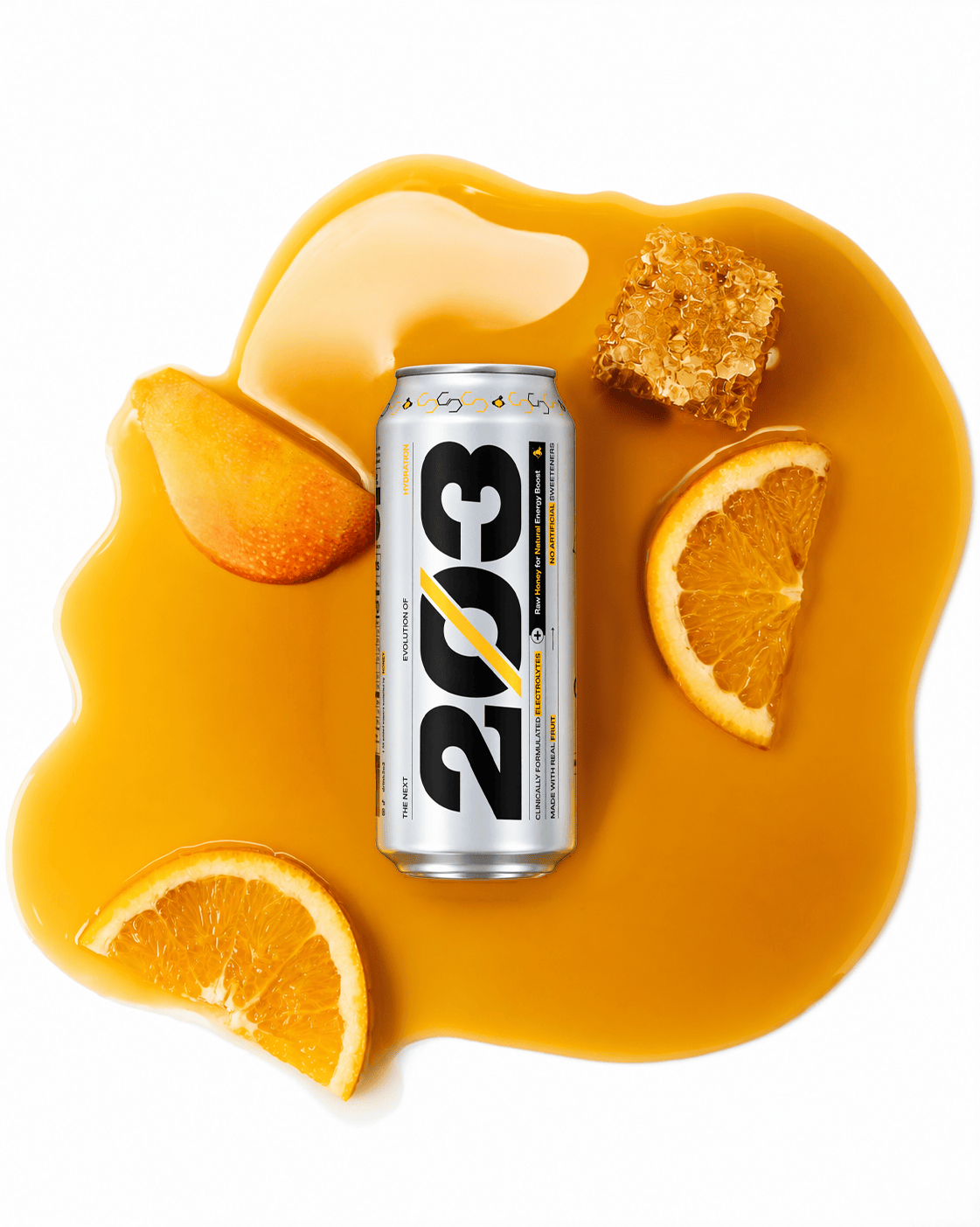
Why put honey and electrolytes in the same can? Because sodium and glucose do more together than either does alone. Sodium is a key electrolyte lost in sweat; the glucose in real honey works with sodium in the small intestine to support fluid absorption. That sodium-glucose pathway is why honey is a functional part of 2O3, not just a sweetener. Honey also brings glucose and fructose for fuel, making the drink a more complete system for hard training. Sodium-sugar-water transport research.
Why put honey and electrolytes in the same drink?
2O3 pairs them because sodium and glucose work together during fluid absorption. Electrolytes replace part of what training takes out; real honey supplies glucose for the sodium-glucose transport pathway and carbohydrates for fuel. Honey contains both glucose and fructose, which use different intestinal transport routes. That combination is our idea of a more complete performance hydration system. Honey carbohydrate composition; human intestinal absorption study.
Most hydration conversations stop at electrolyte replacement. We don't. The formula starts with the athlete: hard sessions, heavy sweat, and a drink that tastes good enough to use consistently. 2O3 is built around four things: complete performance hydration, real honey, properly dosed electrolytes, and exceptional taste.
How does glucose work with sodium to support faster absorption?
Glucose engages SGLT1, which carries glucose and sodium together across the small intestine; water absorption is coupled to solute transport. In that specific pathway, adding glucose enables sodium-glucose cotransport that a glucose-free formula cannot use. How much carbohydrate is in the drink matters, too. Human studies show that type and concentration can change water absorption. Transport research; human absorption study.
The World Health Organization's reduced-osmolarity oral rehydration formula pairs sodium and glucose at 75 mmol/L each. It is a clear example of why sodium and glucose belong together. 2O3 takes that idea into a drink built for training. WHO oral rehydration salts specification.
Why is 2O3 built for hard training?
Hard training can mean substantial sodium loss through sweat. One study of 1,303 athletes found sport-specific averages ranging from about 625 mg per hour in baseball to about 1,285 mg per hour in American football; roughly 950 mg per hour is a useful ballpark for demanding sessions. Your sweat rate and sodium loss can be different. 2O3 gives athletes 1,000 mg sodium per can to help replace what hard training takes out. Athlete sweat sodium-loss data.
The 2O3 ready-to-drink can also contains 340 mg potassium and 60 mg magnesium. Check the 2O3 ready-to-drink product for ingredients and directions. Athletes can plan around their own sweat losses and training conditions.
Does honey do more than provide fuel?
Yes. In 2O3, real honey is a functional partner to sodium: its glucose participates in sodium-glucose transport, while its glucose and fructose also provide carbohydrate fuel. The balance of ingredients matters. We built a honey-and-electrolyte drink for athletes who care about both the system and the taste. Honey composition study; transport research.
Want the can details? Explore 2O3 Performance Hydration.
Frequently asked questions
Does adding glucose to sodium support fluid absorption?
Yes. Glucose activates sodium-glucose cotransport in the small intestine, a pathway involved in sodium and water absorption. The carbohydrate amount and makeup influence how a finished drink behaves. Research.
Is 2O3 an oral rehydration solution?
No. 2O3 is a performance hydration drink built for training. WHO uses the sodium-glucose pairing in its oral rehydration formula; 2O3 uses that principle in a different setting. WHO specification.
How much sodium can athletes lose in an hour?
In demanding sessions, roughly 950 mg per hour is a useful ballpark. Sodium loss varies by sport, heat and the athlete, so use your own training conditions to guide your plan. Athlete data.
Share:
2O3 vs LMNT: which hydration system fits your training?